Invasive Plant Removal
Knotweed, bittersweet & more
Invasive plants like Japanese knotweed and oriental bittersweet don't just spread — they take over, crack pavement, undermine foundations, and crush property value. Cutting them back does nothing; the only durable fix is removing the root system. That's where our equipment makes the difference.
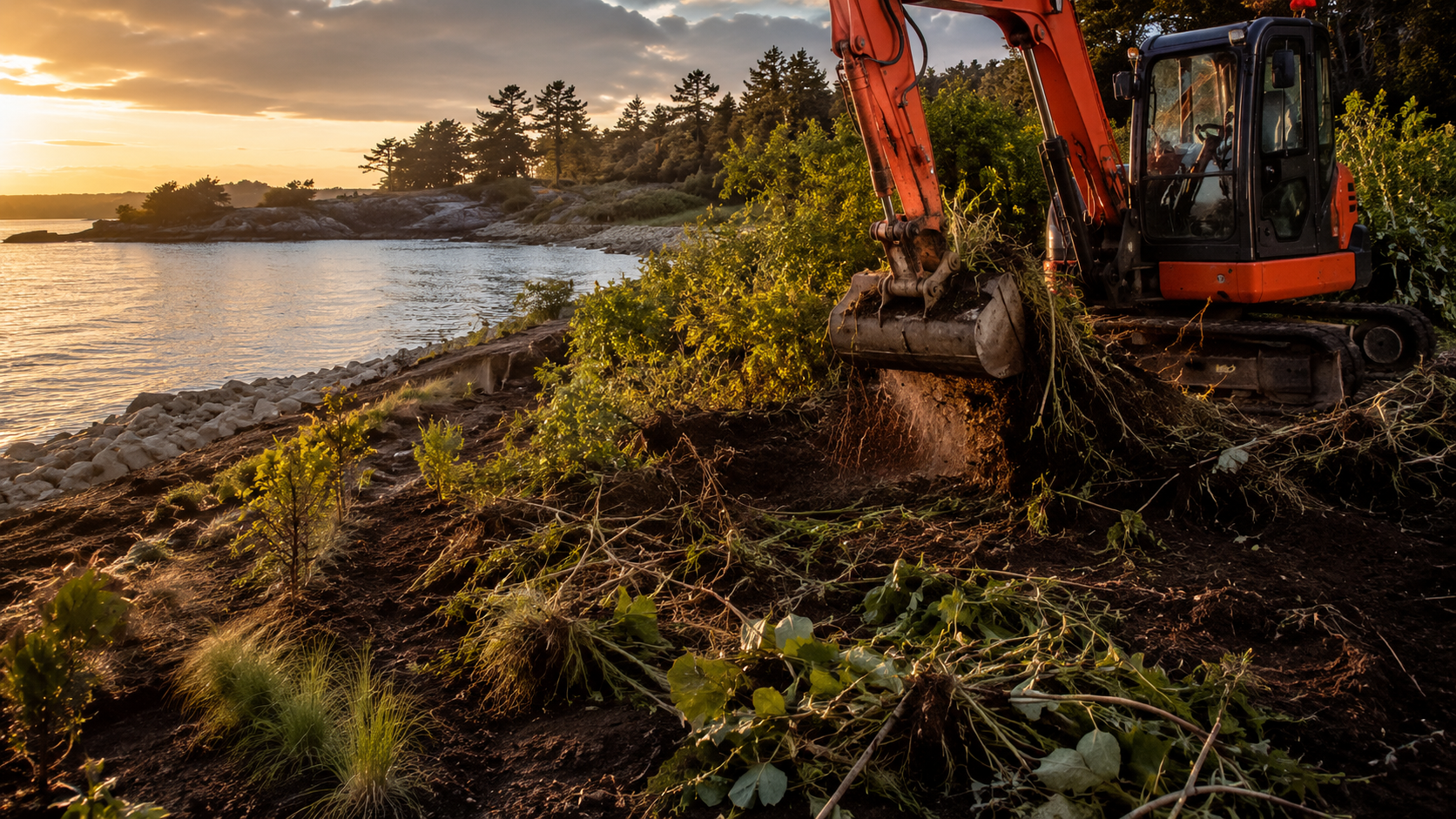
Taylor Earthworks mechanically excavates invasive root masses, removes contaminated soil where needed, and disposes of material properly so the infestation can't re-establish from fragments. We focus on the underground network most landscapers can't reach.
Reclaiming overrun land is one of the most satisfying jobs we do — turning an impassable thicket back into usable, buildable, beautiful property.
How we approach it
Survey
Map the infestation's spread above and below ground.
Excavate roots
Mechanically dig out the full root mass, not just the tops.
Remove & dispose
Haul contaminated material off-site for proper disposal.
Restore
Regrade and prepare the reclaimed ground for its next use.
Invasive Plant Removal questions
Why can't I just cut down Japanese knotweed?
Knotweed regrows from its extensive underground rhizome network and from tiny root or stem fragments. Cutting or mowing actually helps it spread. Durable control means excavating the root system and disposing of the material properly — exactly what mechanical removal does.
How much does invasive plant removal cost?
Cost depends on the size of the infestation, how deep and wide the roots run, soil disposal, and access. Small patches are modest; large established stands are a bigger excavation. We assess and quote each site individually.
Will the invasive come back after removal?
Thorough root-system excavation and proper disposal dramatically reduce regrowth. We may recommend monitoring and spot follow-up for the most aggressive species, but mechanical removal is the most effective approach available.