Site Development
Turning raw land into buildable sites
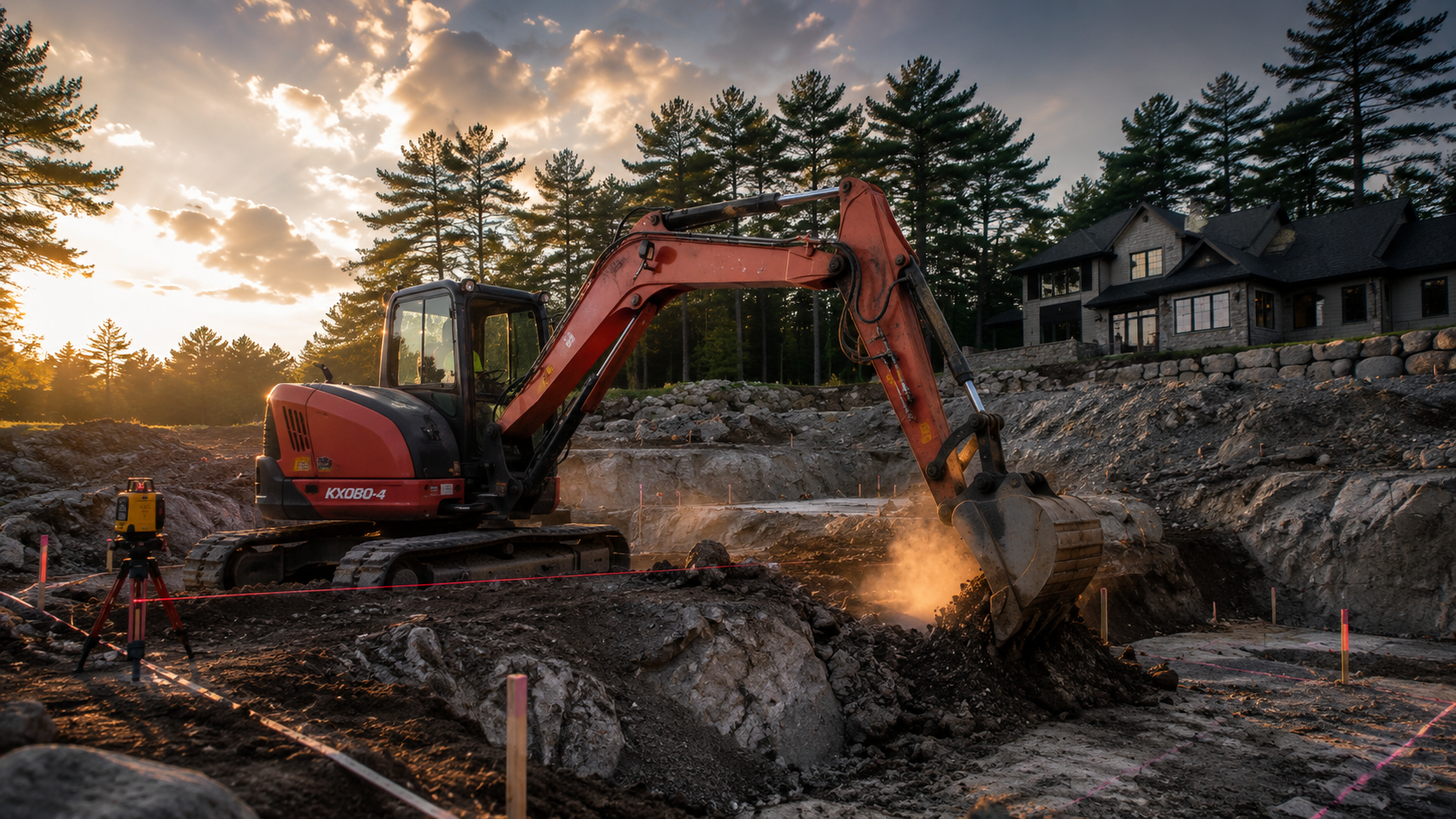
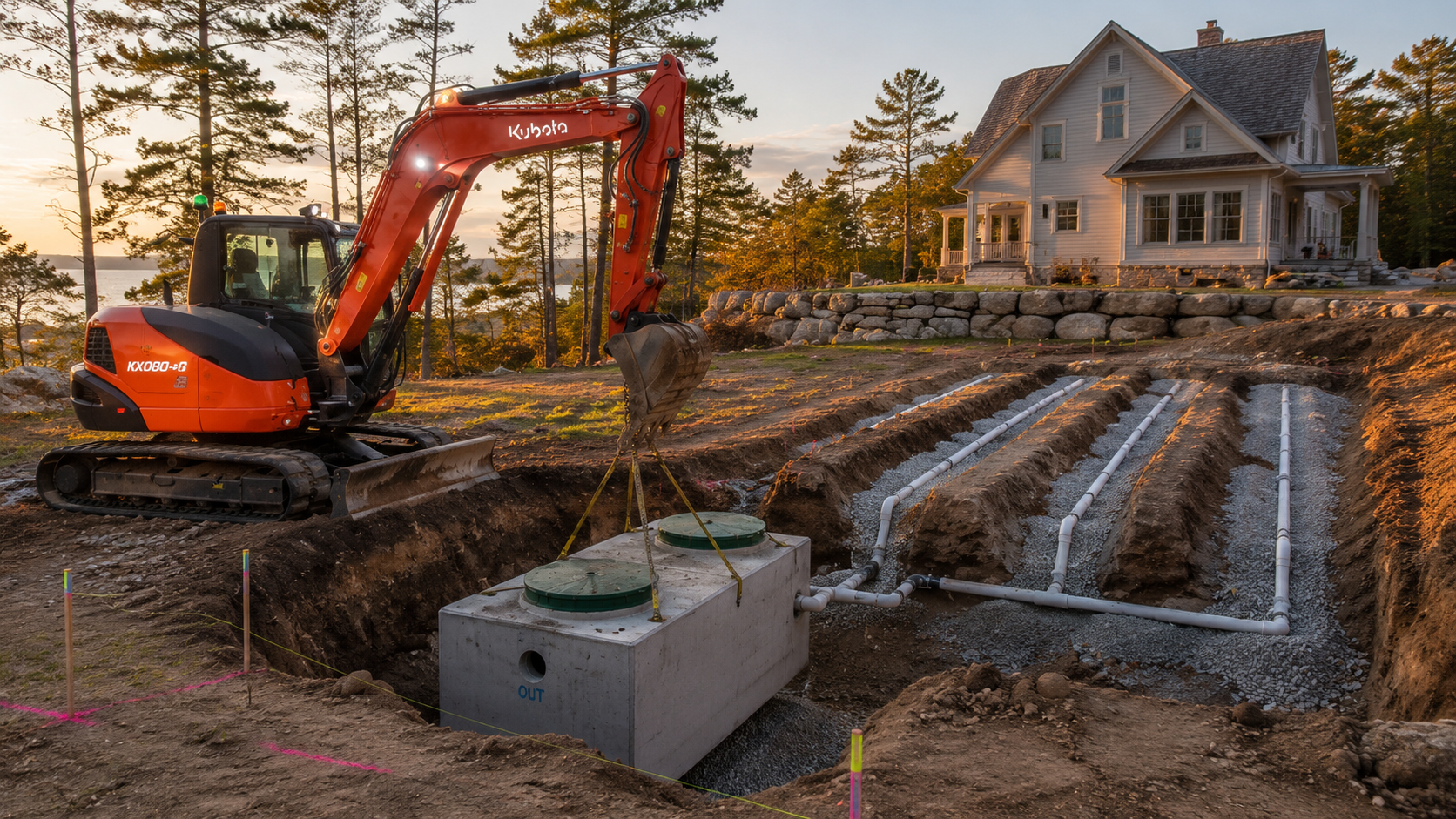
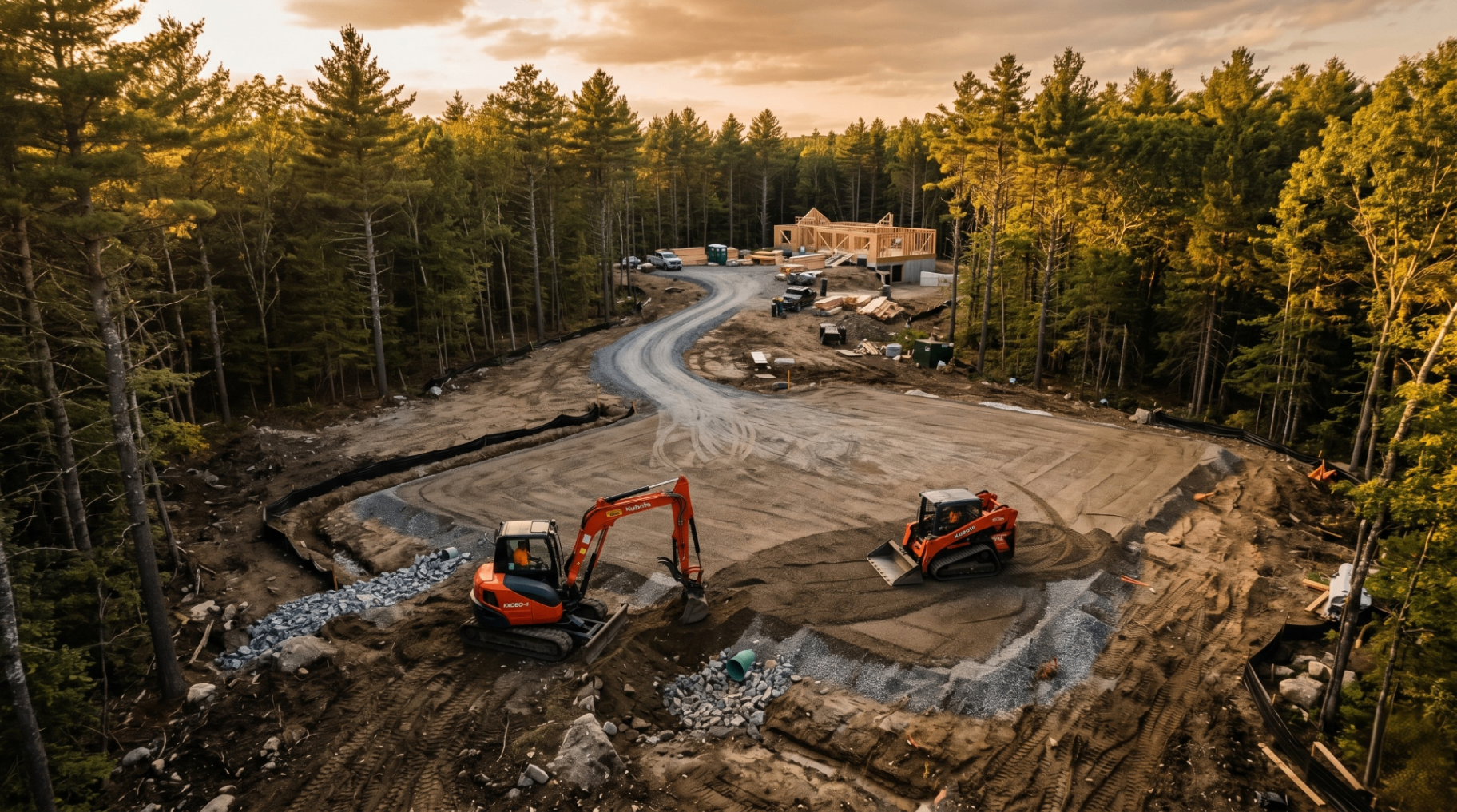
Site development is the full transformation of raw land into a buildable, drainable, durable site. Taylor Earthworks takes properties from standing timber to finished gravel — clearing, grubbing, rough grading, driveways, access roads, building pads, and stormwater management — all sequenced so each phase sets up the next.
A site that's developed right is invisible: the driveway sheds water, the pad stays dry, the slopes hold, and nothing settles or heaves come spring. We build to that standard, accounting for Maine's freeze-thaw cycles, drainage patterns, and soil conditions from day one.
Whether you're a homeowner clearing a house lot, a builder prepping multiple pads, or a developer opening a subdivision, we coordinate with your surveyor, engineer, and town to keep the project moving and compliant.
How we approach it
Clear & grub
Remove trees, stumps, and organics down to suitable subgrade.
Shape & grade
Establish drainage, slopes, and elevations across the site.
Build pads & roads
Place and compact structural fill and gravel for pads and access.
Stabilize
Install erosion controls and finish grade for the next phase.
Site Development questions
How long does site development take?
A single house lot typically takes one to three weeks depending on clearing, ledge, and drainage work. Larger or multi-lot developments run longer. We build a phased schedule so you know what's happening each week.
How much does it cost to prepare land for building in Maine?
Site prep for a residential lot commonly ranges from $10,000 to $50,000+ depending on acreage, tree cover, ledge, driveway length, and how much fill or drainage is required. We provide a detailed, line-item estimate after walking the property.
Do you handle the driveway and culvert too?
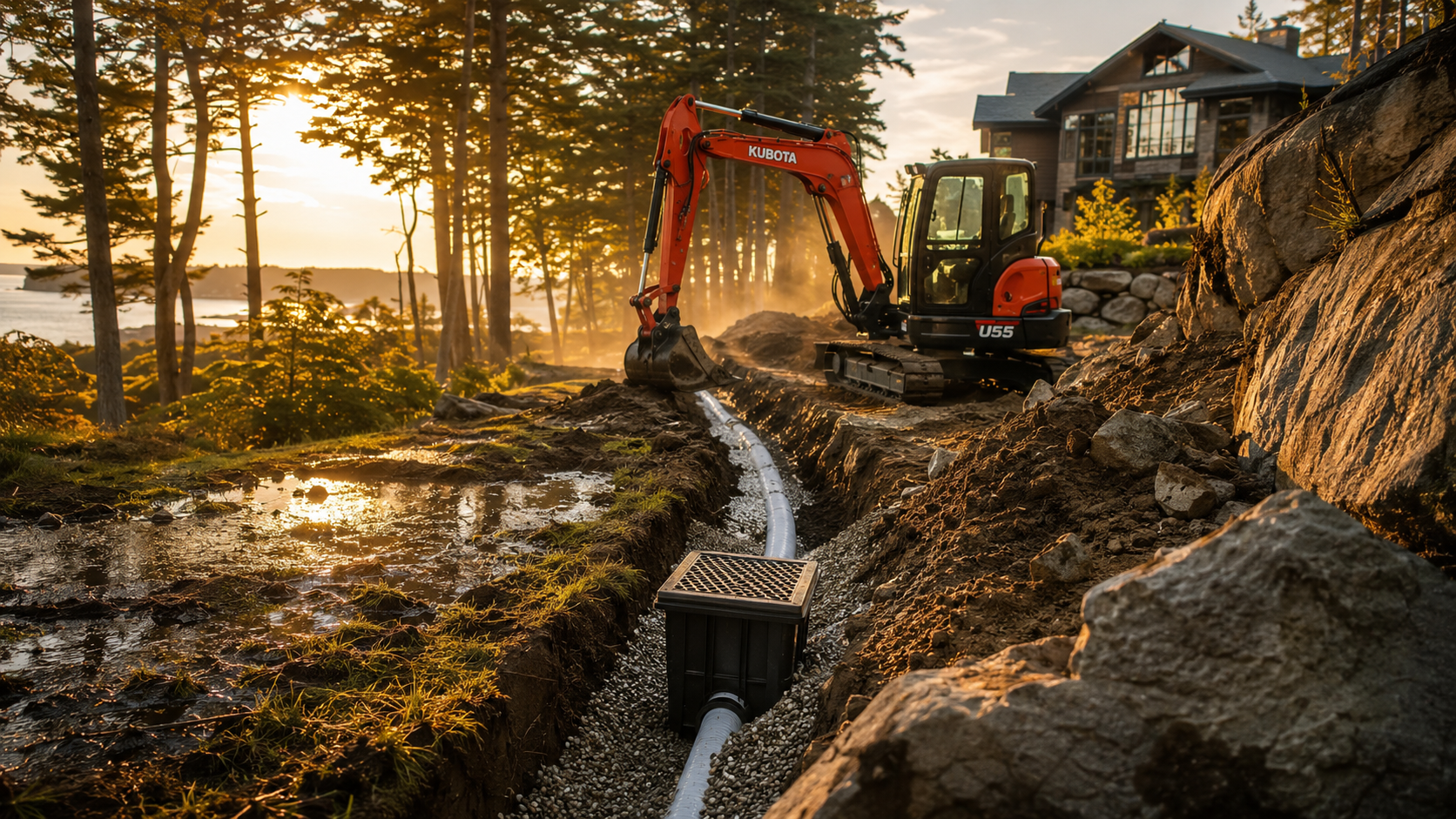
Yes. Driveways, access roads, culverts, and the gravel base are a core part of our site development work, all engineered to drain and hold up to Maine winters.