Septic Systems
Design, install & repair
A septic system is one of the largest and most important investments on any rural Maine property, and getting it right protects your home, your groundwater, and your wallet. Taylor Earthworks installs, replaces, and repairs conventional and engineered septic systems built to the Maine Subsurface Wastewater Disposal Rules.
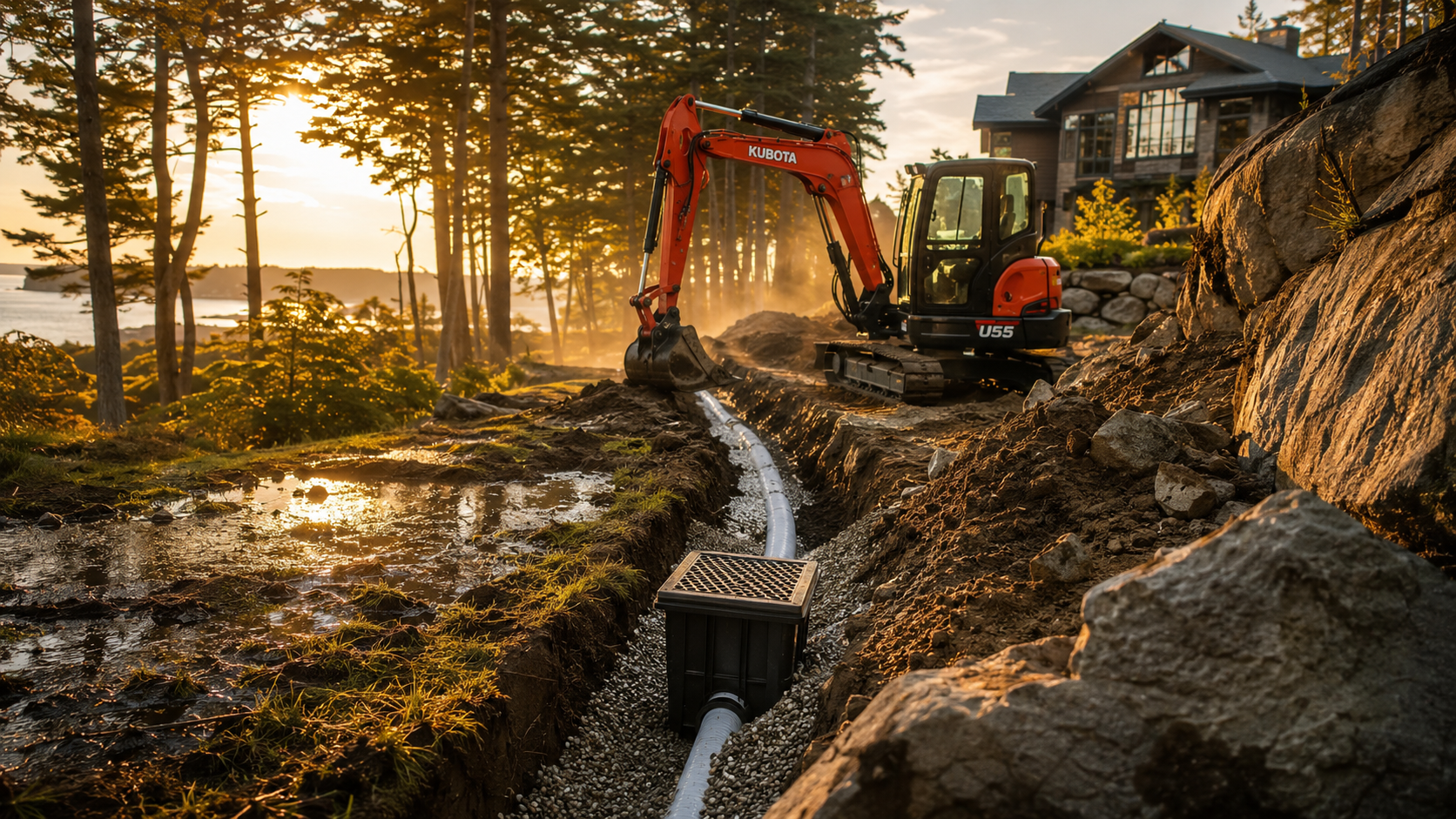
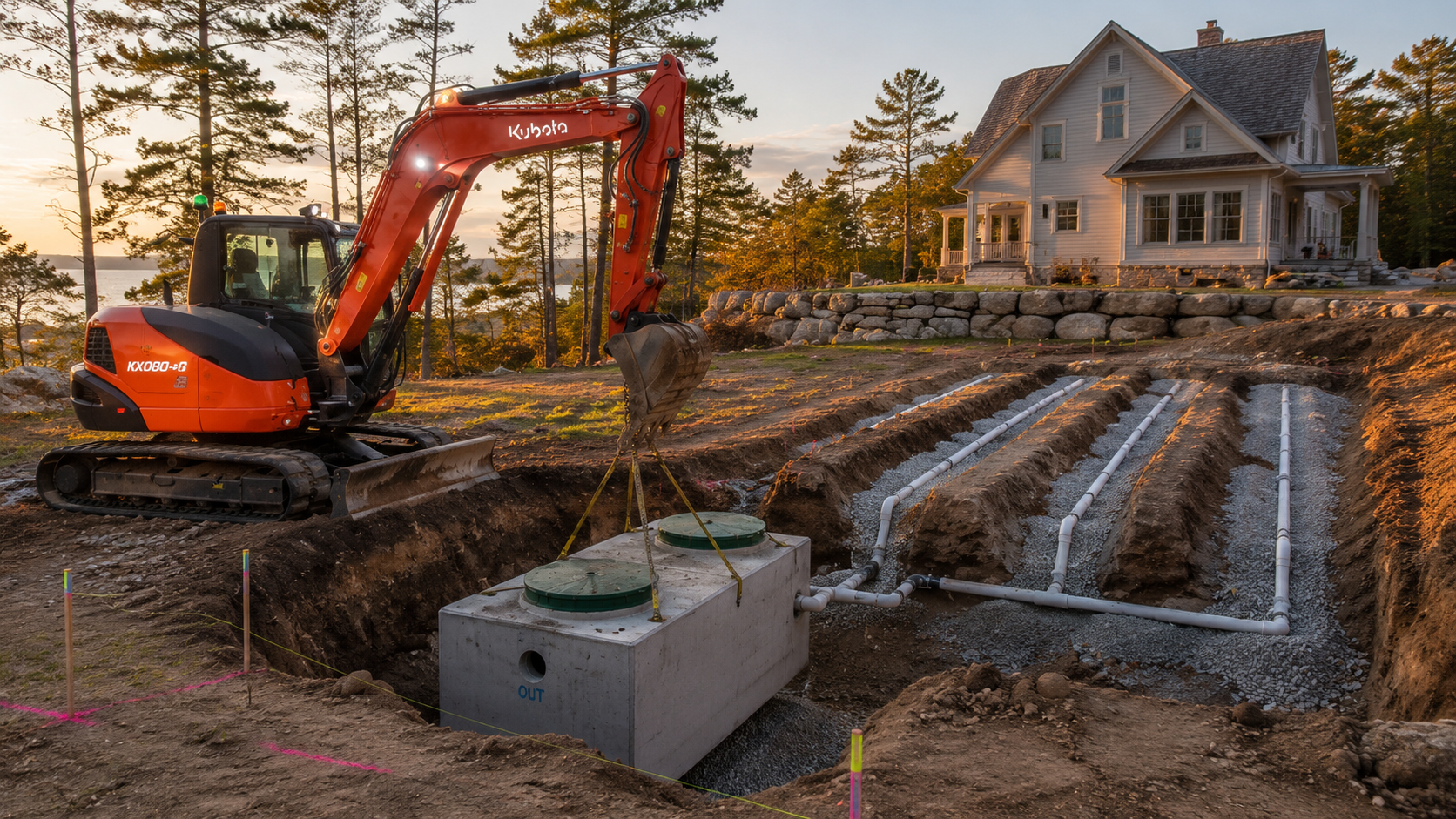
Every system starts with the soil. We work from your licensed site evaluator's design, install the tank, distribution, and disposal field to spec, and inspect every component before backfill. Correct bedding, slope, and compaction are what separate a system that lasts 30 years from one that fails in five.
From a new build needing a full system, to an aging tank and field that's backing up, to a real-estate transaction that needs an inspection, we handle septic work cleanly and to code across Southern Maine.
How we approach it
Design & permit
Build from your site evaluator's design and pull the required permits.
Excavate & set
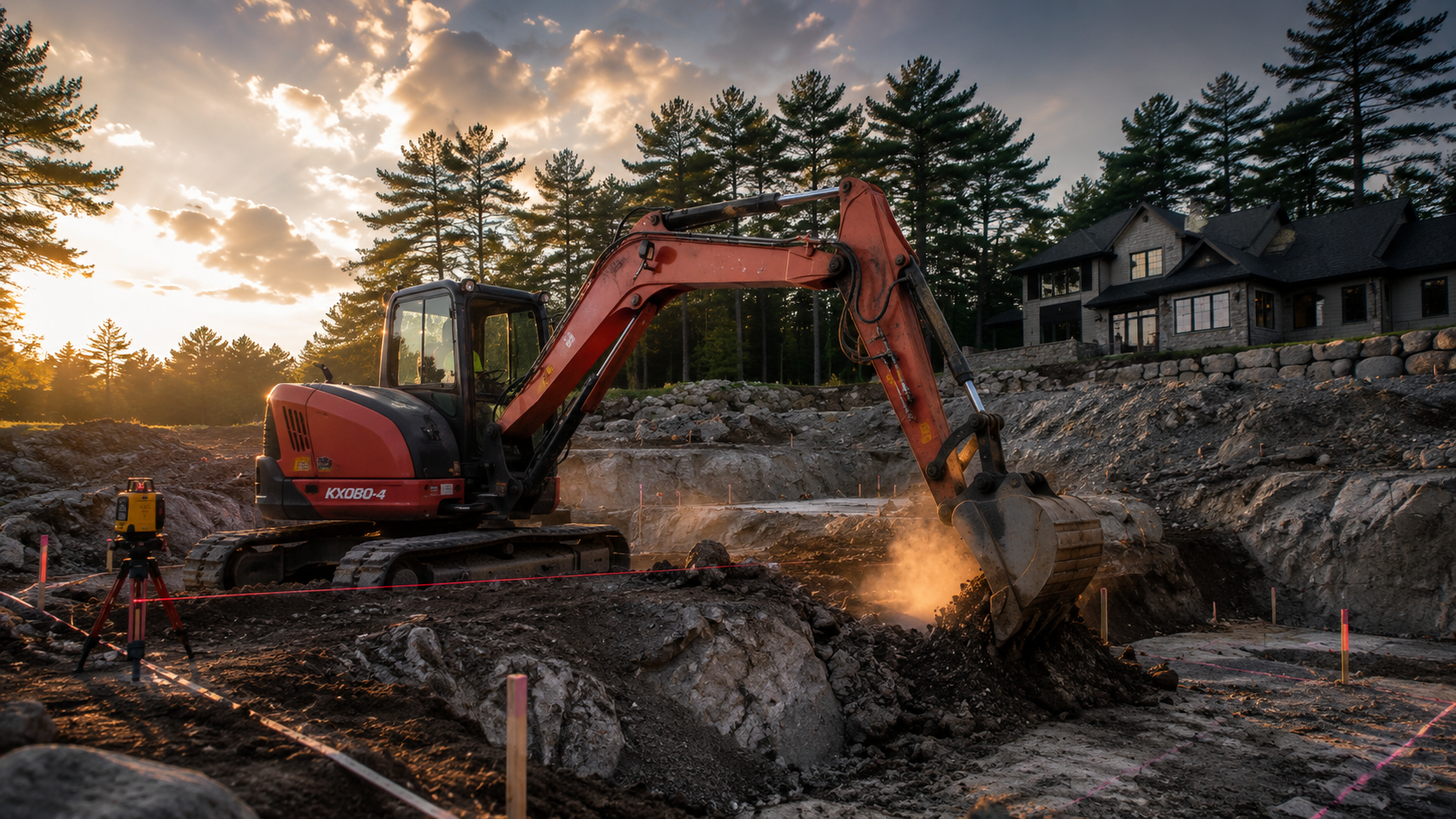
Excavate the field and tank, then set and level components on proper bedding.
Inspect
Have the system inspected before backfill to confirm code compliance.
Backfill & restore
Backfill carefully, finish grade, and restore the surface.
Septic Systems questions
How much does a septic system cost in Maine?
A new conventional septic system in Southern Maine typically costs $12,000 to $25,000, while engineered systems for difficult soils can run $25,000 to $40,000+. Cost depends on system size, soil conditions, the design, and site access. We give you a firm estimate from your approved design.
How does septic permitting work in Maine?
In Maine, a licensed Site Evaluator (LSE) performs a soil test and designs the system on an HHE-200 form. That design is submitted to the local plumbing inspector for a permit. We install to the permitted design and coordinate the required inspections. We can recommend a site evaluator if you don't have one.
How do I know if my septic system is failing?
Common signs are slow drains, sewage odors, wet or unusually green spots over the leach field, and backups. If you're seeing these, call us — catching it early can mean a repair instead of a full replacement.
How long does a septic install take?
Most residential septic installations take two to four days once permits and design are in hand, plus inspection scheduling. Difficult soils or engineered systems take longer.